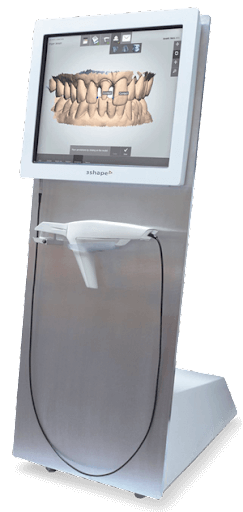
Successful pediatric orthodontic outcomes are a team effort. While you make the critical diagnosis in the chair, the effectiveness of an appliance like a space maintainer often comes down to its fabrication. The precision of the fit, the quality of the materials, and the durability of the design all play a vital role in patient comfort and treatment success. This is where your lab becomes an essential extension of your practice. Below, we’ll cover the clinical guidelines for recommending space maintainers, but we’ll also discuss what makes an excellent space maintainers dental lab. We’ll look at how digital workflows and skilled technicians contribute to creating appliances that help you deliver the best possible care for your young patients.
When it comes to pediatric dentistry, space maintainers play a crucial role in preserving a child’s dental health after premature tooth loss. These devices are designed to maintain the gap left by a missing tooth until the permanent tooth grows, preventing dental alignment and bite development complications. Knowing when to recommend space maintainers can significantly impact a patient’s long-term oral health. This article will discuss the appropriate circumstances for recommending space maintainers, their benefits, and how they compare to other orthodontic devices like retainers & night guards.
What is a Dental Space Maintainer?
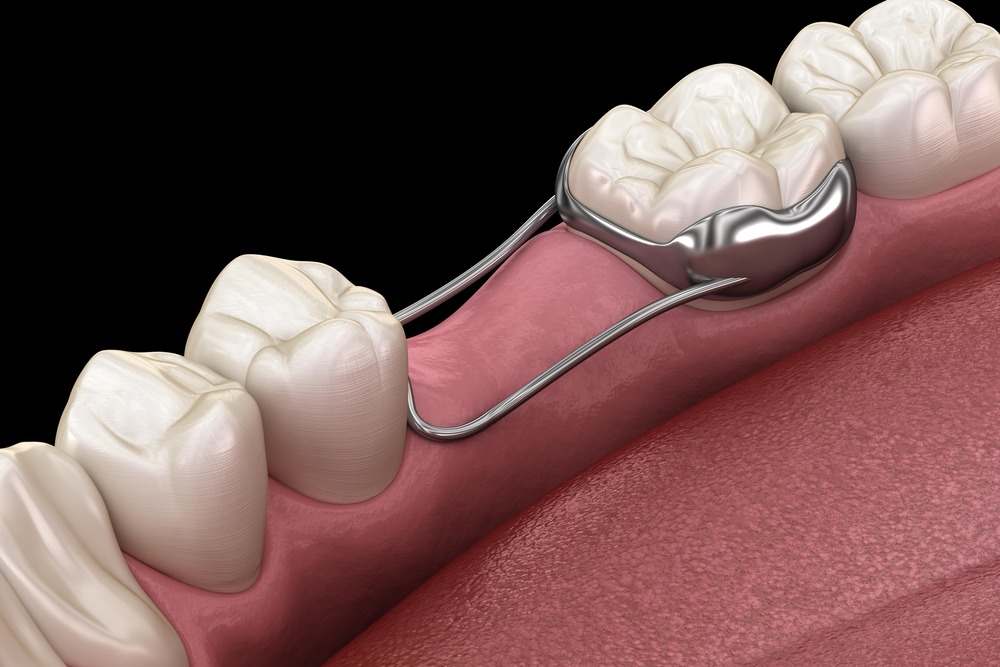 Space maintainers are orthodontic devices that open the space left by a lost tooth so that neighboring teeth do not shift into the gap. Without a space maintainer, the surrounding teeth can drift, crowding or misaligning the permanent teeth when they eventually come in. These devices can be custom-made and are either fixed or removable, depending on the patient’s specific needs. Fixed space maintainers are cemented into place, helping them remain stable during everyday activities. Removable maintainers, on the other hand, function similarly to retainers, which the patient can take out.
Does Your Young Patient Need a Space Maintainer?
Space maintainers are typically recommended when a child loses a primary tooth prematurely due to decay, trauma, or other dental complications. Some key scenarios when a space maintainer should be recommended include:
- Premature Loss of Primary Teeth: A space maintainer is necessary to preserve the gap if a child loses a baby tooth before the permanent tooth erupts. It is particularly necessary for molars, as they guide the development of permanent teeth.
- Preventing Misalignment: When a tooth is lost early, the surrounding teeth may shift into the open space, causing misalignment or crowding. A space maintainer prevents this, so the alignment remains correct as the permanent teeth emerge.
- Post-Extraction of Decayed Teeth: Sometimes, a tooth may need to be extracted due to severe decay. After extraction, a space maintainer helps the child’s dental arch develop properly, preventing the need for more extensive orthodontic treatments later.
- Delay in Permanent Tooth Eruption: If a child’s permanent tooth is delayed in emerging, a space maintainer can help make sure the surrounding teeth stay in place until the permanent tooth is ready.
- Orthodontic Treatments: Space maintainers can sometimes be used with other orthodontic treatments, so that teeth shift into their correct positions without causing crowding.
When Are Space Maintainers Not Recommended?
While space maintainers are a go-to solution in many pediatric cases, they aren’t a universal fix. Recommending one when it isn’t needed can lead to unnecessary treatment for the patient. Understanding the specific clinical situations where a space maintainer is contraindicated is just as important as knowing when to use one. Key factors to consider include the eruption timeline of the permanent tooth, the presence of all permanent teeth, and the current state of the dental arch.
Imminent Eruption of Permanent Tooth
Timing is everything when it comes to pediatric dental development. If a child loses a primary tooth but the underlying permanent tooth is expected to erupt soon, a space maintainer is generally not necessary. The common clinical guideline is that if radiographic evidence shows the permanent tooth will likely emerge within six months, the natural eruption process is sufficient to maintain the space. In these instances, the erupting tooth itself will occupy the gap, preventing adjacent teeth from shifting. Monitoring the patient’s progress is still important, but intervening with a device may be redundant.
Congenitally Missing Permanent Tooth
A space maintainer’s purpose is to hold a spot for a permanent tooth that is on its way. However, if a patient is congenitally missing a permanent tooth (a condition known as tooth agenesis), there is no tooth to save space for. Placing a space maintainer in this scenario serves no long-term benefit. Instead, the focus should shift to developing a comprehensive treatment plan that addresses the missing tooth. This plan might involve allowing the space to close naturally or planning for future restorative work, such as dental implants or a bridge, once the patient’s jaw has fully developed.
Severe Space Loss
Space maintainers are designed to be preventative; they maintain an existing space rather than create a new one. If a primary tooth was lost some time ago and the neighboring teeth have already drifted significantly into the gap, a simple space maintainer will not be effective. At this point, the problem has shifted from space maintenance to space regaining. Correcting this issue typically requires active orthodontic treatment, such as using a space regainer or braces, to push the drifted teeth back into their proper positions. Once the space has been successfully reopened, a fixed restoration like a bridge may be considered.
Fixed vs. Removable: Choosing the Right Option
There are different types of space maintainers, and the choice depends on the child’s dental needs and lost tooth. Common options include:
- Fixed Space Maintainers: These are cemented into place and include options like unilateral maintainers (holding space for one tooth) or bilateral maintainers (holding space on both sides of the mouth).
- Removable Space Maintainers: Similar to retainers, the patient can take out these. They are typically used when a temporary solution is needed or when the patient is responsible enough to manage a removable device.
Common Types of Fixed Space Maintainers
Fixed space maintainers are cemented to adjacent teeth and are not meant to be removed by the patient. They are durable and require minimal compliance, making them an excellent choice for younger children. Several designs are available, each suited for a specific situation depending on which tooth was lost and where it was located in the mouth. Choosing the right type ensures the best outcome for your patient’s developing smile.
Band and Loop
The band and loop is one of the most common unilateral space maintainers. It consists of a stainless steel band fitted around a molar, with a wire loop soldered to it that extends to the adjacent tooth, holding the space open. This simple yet effective design prevents the posterior tooth from drifting forward into the empty space. While these can be fabricated in-office, partnering with a lab that accepts digital scans can streamline the process. Sending a precise digital impression allows for the creation of a perfectly fitted appliance, saving valuable chair time and ensuring a comfortable experience for your patient.
Lingual Arch
When multiple primary teeth are lost in the lower arch, a lingual arch is an ideal bilateral solution. This appliance features bands on the molars connected by a wire that runs along the inside (lingual side) of the lower teeth. It effectively prevents the molars from tipping or drifting forward, preserving the necessary space for incoming permanent teeth. The lingual arch is a passive appliance, meaning it simply holds the space rather than actively moving teeth, making it a stable and low-maintenance option for managing significant space loss in the mandible.
Distal Shoe
The distal shoe is a specialized fixed maintainer used in a very specific scenario: when a primary second molar is lost before the permanent first molar has erupted. This appliance has a metal guide plane that is inserted into the gum tissue to guide the unerupted permanent molar into its correct position. Because it extends subgingivally, careful placement and monitoring are essential to ensure proper eruption and prevent impaction. It’s a critical tool for preventing significant space loss and future orthodontic complications when that key primary molar is lost too early.
Nance Appliance
For the upper arch, the Nance appliance serves a similar purpose to the lingual arch in the lower jaw. It is a bilateral maintainer that uses bands on the maxillary molars, connected by a wire that crosses the palate. An acrylic button rests against the roof of the mouth just behind the front teeth, providing resistance that prevents the molars from moving forward after the premature loss of primary teeth. The Nance appliance is particularly effective for maintaining the arch length in the maxilla when multiple teeth are missing.
Trans-Palatal Arch (TPA)
The Trans-Palatal Arch, or TPA, is another fixed appliance for the maxillary arch. It consists of a wire that runs across the palate, connecting bands on the molars of opposite sides. Unlike the Nance appliance, it doesn’t have an acrylic button. The primary function of the TPA is to maintain the transverse width of the upper arch, preventing the molars from rotating or narrowing the palate. It can be used passively to hold space or can be activated to achieve minor molar rotation or expansion, making it a versatile tool in your orthodontic toolkit.
Other Related Orthodontic Appliances
Beyond simply maintaining space, some situations require appliances that can regain lost space or correct other developmental issues. These devices are often used as part of an early interceptive orthodontic strategy to guide jaw growth and correct problems before they become more severe. Understanding these related appliances can help you provide more comprehensive care for your young patients.
Space Regainers
Sometimes, a patient presents after space has already been partially lost due to drifting teeth. In these cases, a simple maintainer isn’t enough—you need a space regainer. These active appliances use springs or screws to apply gentle pressure, pushing molars back to their correct position and reopening the space needed for the permanent tooth to erupt. Once the necessary space has been regained, the active component can be removed, and the appliance can function as a passive space maintainer until the permanent tooth emerges.
Bite Plates
Bite plates are removable appliances designed to correct deep bites, where the upper front teeth excessively overlap the lower front teeth. An anterior bite plate fits against the roof of the mouth, and when the patient bites down, only the lower incisors touch the plate. This disocclusion of the posterior teeth allows them to erupt slightly, which helps to open the bite and level the lower arch. It’s an effective way to address vertical bite issues and can be a key part of early interceptive orthodontic treatment.
Habit Appliances
Persistent oral habits like thumb sucking or tongue thrusting can significantly impact dental and skeletal development, often leading to open bites or flared incisors. Habit appliances are designed to interfere with these habits, making them less comfortable or effective. For example, a “crib” or “rake” appliance is a fixed device placed behind the upper front teeth that physically blocks the thumb or tongue. By helping the patient break the habit, you can allow the teeth and jaws to develop more normally, often preventing the need for more complex orthodontic correction later on.
The Long-Term Benefits of Space Maintainers
The primary advantage of space maintainers is their ability to preserve dental alignment and prevent future orthodontic issues. By holding the space for the permanent tooth, they prevent other teeth from shifting into the gap, which can cause misalignment and crowding. Early intervention with space maintainers can help reduce the need for future orthodontic work and guarantee that permanent teeth erupt correctly.
The Impact of Premature Tooth Loss by the Numbers
When a child loses a primary tooth too soon, it’s more than just a gap in their smile. Research shows that premature tooth loss can cause significant issues with dental alignment and bite development. The reason is straightforward: when a space opens up, the neighboring teeth naturally start to shift into the empty area. This movement can block the path for the permanent tooth that’s meant to grow in, leading to crowding, crooked teeth, or even an impacted tooth that can’t erupt properly. Addressing these problems later often requires more involved and lengthy orthodontic treatments. Using a space maintainer is a proactive step that prevents these complications, ensuring the permanent tooth has the room it needs to emerge correctly and preserving the natural structure of the dental arch.
Custom-Made vs. Prefabricated Space Maintainers
When you decide a space maintainer is the right call, the next step is choosing between a custom-made or a prefabricated appliance. Custom-made options, like the classic band and loop, are crafted in a dental lab to fit the patient’s unique anatomy perfectly. This process typically requires taking an impression or a digital scan and involves multiple appointments. While effective, the time commitment can sometimes be challenging for younger patients. On the other hand, prefabricated space maintainers are ready-to-use solutions that can often be placed in a single visit. The choice depends on the specific clinical situation, the patient’s temperament, and the long-term treatment goals for their developing smile. For custom appliances, working with a lab that handles digital case solutions can streamline the fabrication process significantly.
Traditional Lab-Fabricated Appliances
For decades, traditional lab-fabricated appliances have been the go-to solution for space maintenance, and for good reason. These custom-made devices are designed for a precise fit, which contributes to their high success rate. For instance, studies on conventional band and loop space maintainers show they are effective in about 86.6% of cases after one year of use. This reliability makes them an excellent choice for many situations, especially when a long-term solution is needed. As a dental professional, you know the value of a perfect fit, and that’s what you get with a custom appliance. By sending a case to a full-service lab, you can ensure your patient receives a durable, comfortable maintainer built to their exact specifications, whether it’s a simple unilateral device or more complex removable appliances.
Modern Prefabricated Options
While custom appliances are highly effective, modern prefabricated space maintainers offer a compelling alternative focused on efficiency. Their biggest advantage is the ability to be placed in a single appointment, which is a huge benefit for both the patient and the practice. Reducing chair time minimizes potential anxiety for the child and frees up your schedule. This single-visit solution means you can address the issue immediately without the waiting period required for lab fabrication. This approach aligns perfectly with the goals of a modern practice looking to incorporate efficient digital workflows and provide a more comfortable patient experience. Prefabricated options are a practical tool to have in your toolkit, especially for straightforward cases where immediate intervention is key.
The Role of the Dental Lab in Pediatric Orthodontics
When you recommend a space maintainer, you’re initiating a collaborative process that extends beyond your office walls. The success of these crucial orthodontic appliances relies heavily on the precision and quality of their fabrication, which is where your dental lab partner comes in. A great lab acts as an extension of your practice, translating your clinical expertise into a tangible, custom-fit device that ensures the best possible outcome for your young patients. Understanding the lab’s role and knowing what to look for in a partner can significantly streamline your workflow and enhance the level of care you provide.
The Skilled Technicians Behind the Scenes
While you’re focused on patient care in the chair, a team of skilled technicians is working diligently behind the scenes to create the custom appliances your young patients need. Dental labs are essential partners in pediatric orthodontics, responsible for fabricating high-quality, precise space maintainers. These devices aren’t mass-produced; they are custom-made by certified technicians who translate your prescriptions into functional, comfortable appliances. This level of craftsmanship ensures that each space maintainer fits perfectly, preserving the necessary space for proper dental development and contributing to a positive treatment outcome for the child. A reliable lab partner is truly an extension of your practice.
What to Look for in a Space Maintainer Laboratory
When choosing a laboratory for your pediatric cases, a few key factors make all the difference. First, confirm the lab uses high-quality, FDA-approved materials to ensure the safety and durability of the appliance for your young patient. The expertise of the technicians is also paramount; experienced professionals are better equipped to handle complex cases and deliver consistent results. Look for a lab that values clear communication and collaboration, making it easy to discuss case specifics. Embracing modern technology is another hallmark of a great lab. Labs that accept digital cases can streamline your workflow, improve accuracy, and often provide a faster turnaround, allowing you to deliver care more efficiently.
Find the Right Space Maintainers Dental Lab
Next Dental Lab grasps the needs of early intervention in pediatric dentistry. Our high-quality space maintainers and dental products like retainers & night guards are designed to help dentists bring comprehensive care to their younger patients. Contact us now.
Frequently Asked Questions
How do I decide between a fixed and a removable space maintainer for my patient? The choice often comes down to the patient’s age and maturity level. For younger children, a fixed appliance is usually the most reliable option because it eliminates any issues with compliance; you don’t have to worry about it getting lost or not being worn enough. Removable maintainers can be a good fit for older, more responsible children who can be trusted to wear the device as instructed and care for it properly.
What is the protocol if a patient comes in after significant space has already been lost? In these situations, a simple space maintainer won’t be enough because its job is to hold an existing space, not create a new one. The first step is active treatment with a space regainer. This appliance will gently push the drifted teeth back to their correct positions. Once the necessary space has been successfully reopened, the appliance can often be made passive to function as a maintainer until the permanent tooth erupts.
How does a digital workflow improve the process of creating a custom space maintainer? Using a digital scanner instead of traditional impression material offers a more comfortable experience for the child and provides the lab with a highly precise 3D model. This accuracy leads to a better-fitting appliance, which means fewer adjustments are needed when you seat it. The digital file can be sent to the lab instantly, streamlining the entire process and often resulting in a quicker turnaround time for the finished appliance.
When is a bilateral appliance like a Lingual Arch a better choice than a unilateral one? A unilateral appliance, such as a band and loop, is ideal for maintaining the space of a single lost tooth on one side of the arch. However, if a child has lost multiple teeth, or if you need to prevent molars on both sides from shifting forward, a bilateral appliance is necessary. A Lingual Arch or Nance appliance provides a more rigid and stable solution to preserve the overall integrity and length of the entire dental arch.
What are the most important care instructions to give parents for a fixed space maintainer? Clear communication is key. Let parents know that while the appliance may feel unusual at first, most children adapt quickly. Stress the importance of thorough brushing and flossing around the bands and wires to prevent plaque buildup. It’s also crucial to advise them to avoid very sticky or hard foods, like caramel or hard candy, that could bend or dislodge the appliance. They should contact your office right away if the maintainer feels loose or gets damaged.
Key Takeaways
- Know when to intervene and when to wait: Space maintainers are essential for premature tooth loss but are not always the right call. Avoid unnecessary treatment by holding off if the permanent tooth is erupting soon, is congenitally missing, or if significant space has already been lost.
- Match the appliance to the clinical need: Different scenarios require different solutions, from simple unilateral maintainers to more complex bilateral appliances. Selecting the correct type of device is fundamental to guiding proper dental development and achieving a successful outcome.
- A quality lab is an extension of your practice: The success of a custom appliance depends on its fabrication. Partnering with a reliable lab that uses digital workflows ensures a precise, comfortable fit for your patient and can significantly improve your practice’s efficiency.